7 Common hangboard training mistakes
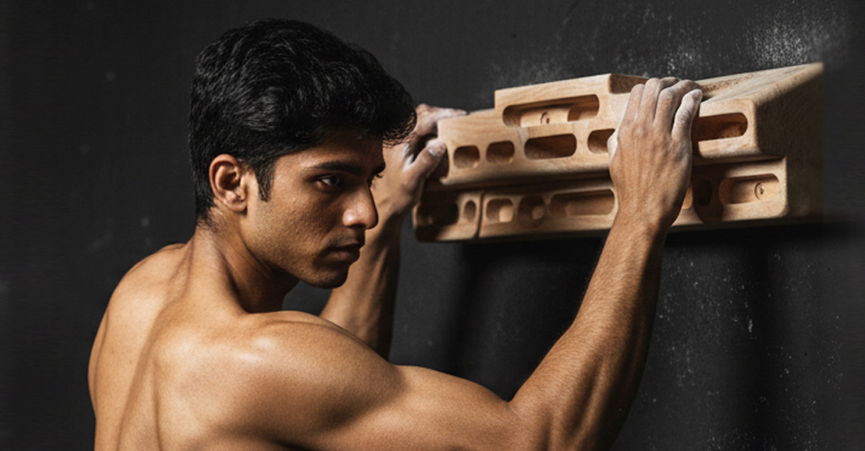
If you want to get stronger at climbing, hangboarding can be a great tool. It helps you build finger strength, which is important when you're trying hard moves on small holds.
But hangboarding is not just about hanging on tiny edges or adding more weight every session. Many climbers make simple mistakes that slow down their progress or lead to finger injuries.
Here are 7 common hangboard mistakes and how you can avoid them.
1. Skipping the warm-up
One of the biggest mistakes is jumping straight onto the hangboard without warming up. Your fingers need time to get ready for hard training. Starting with heavy hangs when your body is cold is not a good idea.
How to avoid it:
Do 5–10 minutes of jumping jacks or banded shoulder work, then do easy boulder problems or hang with your feet on the ground on big jugs.
Ramp up slowly before you load your fingers.Never rush your warm-up just because you're excited to train.
Warm-Up (15–20 Minutes)
Before jumping on the hangboard, give your body enough time to warm up. Starting with hard hangs on small edges when your fingers are cold is a bad idea.
Start ridiculously easy. Begin with light movements and gradually prepare your fingers, shoulders, and forearms for harder efforts.
You can start with:
• Easy climbing on big holds or low-grade bouldering traverses.
• Feet-supported hangs on large holds, keeping some weight on the ground.
• Gentle pull-ups if they feel comfortable.
• Arm swings, shoulder circles, wrist rotations, and finger extensions.
Build up slowly. Gradually increase the load and move to smaller edges as you warm up. By the time you start your main workout, your fingers and upper body should feel warm and ready to work.
Don't rush it. Your first hang shouldn't be your hardest hang.
Warm-Down (15–20 Minutes)
Once you're done with the hard part of your hangboard session, don't jump straight into another intense exercise. Give your body some time to settle down.
Keep it easy. The warm-down should feel almost effortless. You're not trying to build more strength here; you're simply winding down after the workout.
Here's what you can do:
• Easy, feet-supported hangs on large holds.
• Gentle wrist, shoulder, and arm movements.
• Light forearm stretches without forcing the range of motion.
• Keep everything relaxed and stop if you feel finger pain.
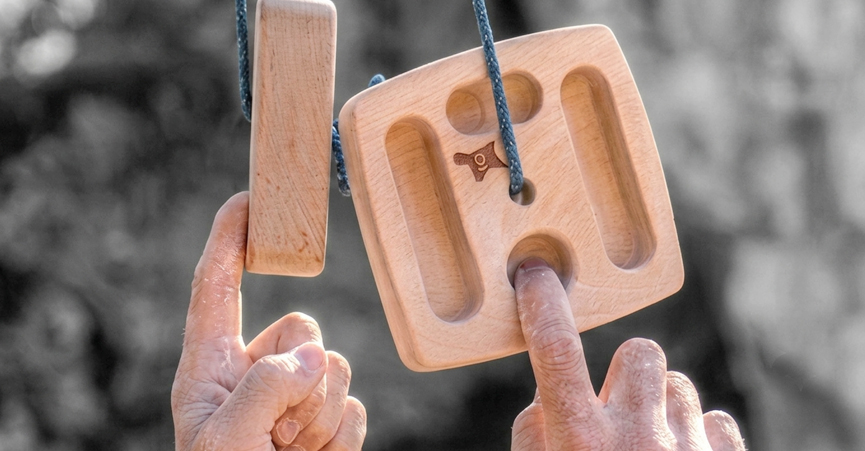
2. Using holds that are too small
A lot of climbers think smaller holds mean better training. So they try to hang on tiny edges before they're ready. This can put too much stress on your fingers, especially if you're also adding weight.
How to avoid it:
• Start with an edge you can hang on with good control. If you can't complete your hangs properly, use a bigger edge (Stick to a standard 20mm edge).
• Adjust the load before shrinking the edge. If your goal is maximum finger strength, you can progressively increase resistance on the same edge instead of immediately moving to smaller holds.
• Keep your hangs controlled. Avoid swinging, sudden loading, or forcing your fingers into a grip position you cannot maintain comfortably.
• Progress gradually. Increase one training variable at a time, whether that's added weight, edge depth, or training volume.
• Pay attention to pain. Sharp finger pain, sudden swelling, or a popping sensation is a reason to stop, not push harder.
3. Hangboarding too often
It's easy to think that more training means faster progress. But your fingers need time to recover, just like the rest of your body. If you're hangboarding hard every day, you might end up feeling weaker instead of stronger.
How to avoid it:
For many climbers, 1-2 hangboard sessions per week can be a good starting point, depending on their experience and climbing schedule.
Give yourself a solid 48 to 72 hours of rest between heavy finger days. This isn't a universal biological rule, though. Your recovery needs depend on how hard you trained, your climbing volume, your experience, and whether you're carrying any fatigue.
If your fingers still feel sore or tired, take a break instead of forcing another workout.
Remember, getting stronger takes time.
4. Using poor body position
Hangboarding might look easy, but body position matters more than you think. Some climbers focus so much on their fingers that they forget about their shoulders, elbows, and overall posture.
Swinging around, losing control of your shoulders, or changing your finger position during a hang can make the exercise less consistent.
Why does body position matter?
When you hang from a hangboard, your fingers aren't working alone. Your forearm muscles generate the force needed to maintain your grip, while your shoulders and upper back help control your body.
If you lose control of your body position, you may start compensating with other muscles or changing your grip without realizing it. This makes it harder to compare one session with another and track your progress accurately.
For example, if you use a different grip position or start swinging during a hang, your fingers may experience a different loading pattern. If you're adding weight, these changes become even more important.
How to avoid it:
• Keep your body still and your movements controlled. Avoid swinging or kicking your legs to help you complete a hang. Use a comfortable grip and try to maintain the same position throughout each hang.
• Whether you're using an open-hand grip or a half crimp, make sure you understand the position and can maintain it without forcing your fingers. Avoid suddenly switching to a more aggressive grip when fatigue sets in.
• If your form starts falling apart, make the exercise easier. Good technique is more important than adding extra weight.
5. Ignoring finger pain
Feeling a sharp pinch or dull ache in your A2 pulley and doing "just one more set." This is a mistake that can cause serious problems.
There's a difference between feeling tired after training and feeling sharp pain in your fingers. If something hurts, don't assume you just need to get stronger.
How to avoid it:
• Stop your session if you feel sharp pain, sudden swelling, or unusual tenderness. Don't try to push through it just to finish your workout.
• If the pain continues or you think you've injured a finger pulley or tendon, get it checked by a healthcare professional who understands climbing injuries.
• Missing a few sessions is better than being unable to climb for months.
6. Copying someone else's training plan
We've all seen a strong climber hanging with extra weight or smashing out repeaters on the hangboard and thought, "I should try that too."
It's tempting to copy what the strongest climber in the gym is doing. But here's the thing: their training plan was built around their body, experience, and goals — not yours.
Following their routine without understanding why they're doing it can lead to poor progress, unnecessary fatigue, or finger injuries.
How to avoid it:
Before starting a hangboard routine, ask yourself what you're training for.
• Want stronger fingers? Focus on controlled, challenging hangs with enough rest between efforts.
• Want better endurance on long routes? Spend more time climbing sustained routes, improving your pacing, and learning where to rest.
• New to climbing? Focus on movement technique, footwork, and building your climbing experience before adding intense finger training.
• Preparing for a specific project? Build a plan around the demands of that route, including its hold types, steepness, length, and crux moves.
You don't need a complicated training plan. Start simple, stay consistent, and adjust as you improve.
7. Forgetting about rest and recovery
You can train hard every week and still make very little progress if you're not recovering properly. Poor sleep, too many hard climbing sessions, and not enough rest can leave your fingers feeling tired all the time.
Remember, training breaks your body down a little. Recovery gives it the chance to adapt and come back stronger.
How to avoid it:
• Keep a simple record of your hangboard sessions. Write down the hold size, hang time, added weight, rest time, and how you felt during the workout. This helps you see whether you're improving or doing too much.
• Get enough sleep, eat well, and take rest days when you need them. You don't have to make every session harder than the last one.
One More Thing: Don't forget to climb
Golden rule: The board won't teach you how to climb
Hangboarding can help you build finger strength, but strong fingers alone won't make you a better sport climber. You still need good footwork, body positioning, route reading, endurance, and the ability to rest on the wall. Try to use hangboarding alongside your regular climbing instead of replacing climbing sessions with more training.
See you on the wall!
October 18, 2026 | By Admin